
Bells, memories of the past
Bells have shaped history and the soundscape in Mexico. An analysis of their cultural and symbolic value, and the urgent need to preserve this heritage legacy.
LinkMyriam BO
The etymology of the word 'Campana' comes from the Late Latin 'campāna', "bronze vessel of Campania", and this, in turn, is an abbreviation of 'vasa campana' ("vessels of Campania"), according to the RAE (Royal Spanish Academy).
The bell as a musical instrument was used to celebrate; to warn of danger, announce a death, call people or signal moments of prayer.
Before the spread of clocks and alert systems, bell ringing served as a means of communication capable of announcing rituals, emergencies, and political events with successive peals.
Bells made of different materials are sonic witnesses of history. They constitute archives of the past that help to understand cultural practices and comprehend the social organisation of other eras, maintained Luis Armando Quintanar Basurto, historian and cataloguer of cultural assets, in the discussion 'Historical letters on bells'.
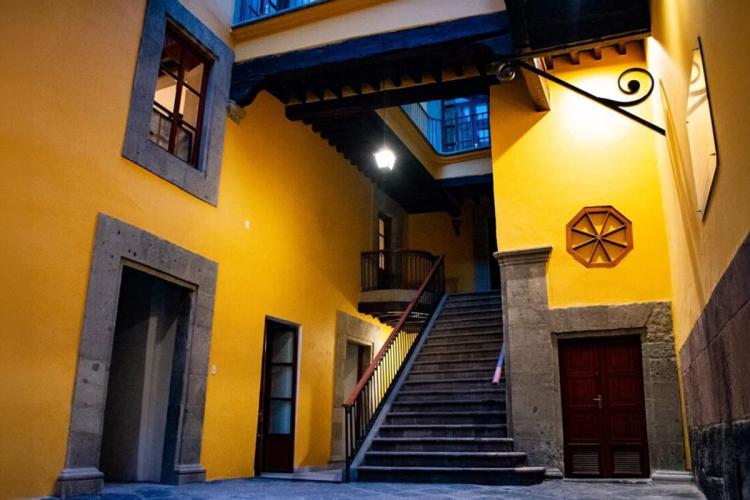
At the House of the First Printing Press of America of the Autonomous Metropolitan University in Mexico City (UAM), the specialist highlighted the historical, symbolic, and public value of these cultural assets, whose inscriptions, sounds, and uses preserve part of shared memory.
In addition to marking the passage of time, for centuries they regulated the rhythm of the community, disseminated news, accompanied celebrations, and contributed to building identity in towns and cities.
For his part, the maestro Alejandro Hernández García, head of the venue, recalled that the building functioned as a foundry workshop in the 16th century, which is why it was known as the "House of the Bells". "In this site, some of the first ones destined for the Metropolitan Cathedral and New Hispanic temples were moulded," he pointed out.
Based on the link between the printed word and resonance, Quintanar Basurto - one of the greatest experts on the subject - proposed understanding these objects as testimonies in which writing, technique, devotion, and collective heritage converge.
With more than 800 pieces documented in Mexico, the historian explained that their inscriptions, names, dates, and titles provide information on cultural expressions. However, their reading is often difficult due to deterioration, the accumulation of dirt, or their location in hard-to-reach towers.
Added to this, before the standardisation of writing, spelling variations and missing letters were common. The founders used movable type similar to that of the printing press and, in the absence of a character, they improvised typographical solutions. "The brain completes what is missing," he detailed.
The talk delved into the sonic and political reach of these bronze pieces. The height of the towers responded to a logic of competition: the higher the elevation, the greater the propagation of sound. Under that principle, the Metropolitan Cathedral in the capital of Mexico sought to impose its sonic presence over the valley with large pieces placed at more than 50 metres.
Beyond technical aspects, the researcher insisted on the human character of this heritage. "We are not looking at bells, we are looking at people," he affirmed, warning that behind each one exist the communities that made them possible and gave them meaning over the years.
He clarified that legends such as the one attributing the placement of examples in the Puebla Cathedral to angels are part of symbolic systems that allowed for the explanation of the unknown and the construction of stories about the past.
He reflected on the transformation of the acoustic landscape. "Before, you didn't control time; you controlled the rhythm of life," he said, referring to the loss of centrality of these peals in the face of contemporary technologies.
Regarding their conservation, he warned that numerous objects disappear due to a lack of records, inadequate interventions, or structural damage, aggravated by earthquakes such as the one that occurred in 2017. In several cases, the collapses were related to previous modifications that weakened the upper parts of the temples.
At the closing, Hernández García underlined the importance of preserving this legacy as part of a living tradition that brings together knowledge, practice, and community.
He added that their care requires strengthening the transmission of knowledge and linking new generations with this heritage, so that these instruments remain an active part of the shared past.
A separate postcard: Bells in Spain and the world
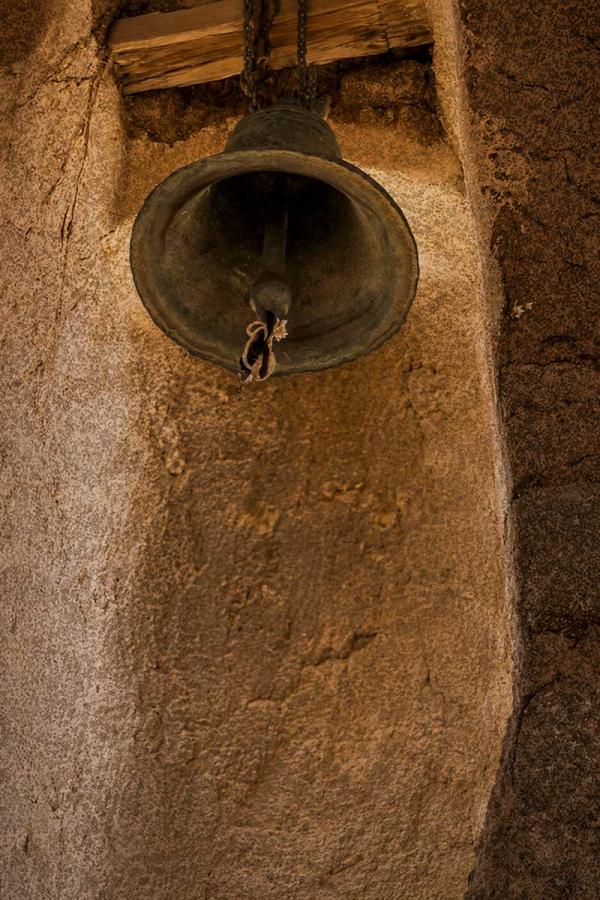
Bells are not exclusive to one landscape; they are a universal language. In Spain, their value is such that the manual ringing of bells has been recognised as Intangible Cultural Heritage of Humanity by UNESCO. This art, which requires physical skill and knowledge of traditional rhythms, is a living testimony that survives in towns and cities, maintaining a sonic dialogue with history.
If we look further afield, the world offers a fascinating diversity: from the deep and spiritual sound of bronze bells in the Buddhist temples of Asia —designed for meditation and calm— to the carillons of Northern Europe, capable of interpreting complex melodies over the roofs of cities. Each region has moulded its bronzes according to its own culture, turning the ringing into an acoustic map that, although diverse in form, continues to fulfil the same essential function: to mark time, to summon the community, and to remind those who listen that history continues to ring.