
<p><strong>Mads Mengel's first feature, The Guest, won Best Feature Film at the 64th Gijón/Xixón International Film Festival on 21 November. The full list of winners, and what a week in Asturias tells you about where to look for next year's films.</strong></p>
<p>I am the person who, in January, reads the list of the year's best films and realises I have seen two of them. So I have learned to read festival palmarès in November instead. They are the early warning system.</p>
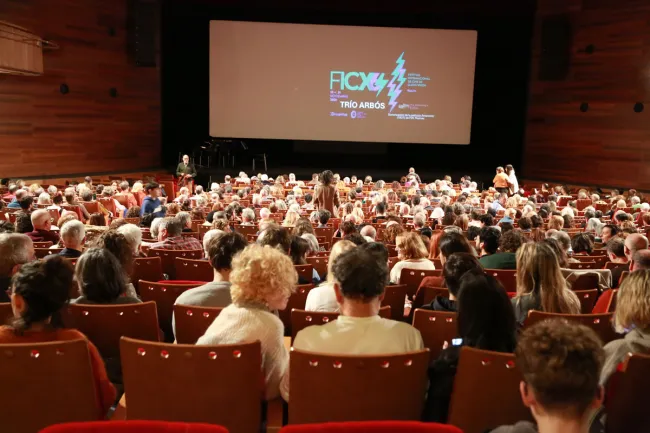
<p>The 64th Gijón/Xixón International Film Festival, FICX to its friends, closed on Saturday 21 November with its awards, and the headline is a first feature from Denmark. <em>La invitada</em>, known in English as <em>The Guest</em> and in Danish as <em>Gæsten</em>, took the Best Feature Film prize in Albar, the festival's main international competition.</p>
<h2>The film</h2>
<p>The set-up is simple and the discomfort is not. New parents Karl and Emilie are heading to a seaside hotel for a weekend to announce their baby's name to family and friends. The day before, Karl's mother Vibeke turns up. He has not spoken to her in years.</p>
<p>Vibeke is played by Trine Dyrholm, one of the finest actors in Scandinavia, with Simon Bennebjerg and Josephine Park as the couple. The film runs 99 minutes and sits squarely in the Nordic tradition of social awkwardness as a dramatic language, closer in spirit to a family drama than to the horror its title might suggest.</p>
<p>Mengel, a graduate of the National Film School of Denmark whose short <em>For Juliane</em> was nominated for a Robert, the Danish academy award, co-wrote the script with Christian Bengtson. He has described the film as being about what we carry from our parents, and what it takes not to pass it on.</p>
<p>Gijón is not the film's first stop. It premiered in July in the main competition at Karlovy Vary, the first Danish film to compete there in more than a decade, and left with Best Director and the Special Jury Prize. A special mention at Zurich followed. Denmark gets it in cinemas in June 2027; the rest of us will depend on distributors, which is exactly where festival prizes earn their keep.</p>
<h2>The rest of the Albar jury's choices</h2>
<p>The international jury, Sonora Broka, Álvaro Gago, Olmo Omerzu, Nadine Rothschild and Bárbara Santa-Cruz, gave Best Director to Félix De Givry for <em>Adieu monde cruel</em>, a French-Belgian production. The acting prizes, sponsored by the performers' society AISGE, went to Yuki Katayama for the Japanese film <em>Fujiko</em> and to Anthony Boyle for <em>Veo caer edificios como rayos</em>.</p>
<h2>Why a festival like FICX matters</h2>
<p>Here is the thing I did not understand until I started paying attention. The big festivals, Cannes, Venice, Berlin, decide which films exist. The mid-size ones, Gijón, Thessaloniki, Seville, Karlovy Vary, decide which of those films get seen outside the countries that made them.</p>
<p>FICX does this with a structure worth knowing. Albar is for established and emerging directors. Retueyos, an Asturian word for new shoots, is only for first and second features; this year the FIPRESCI critics' jury gave it to <em>Meanwhile in Namibia</em> by Jonas Spriestersbach, with a special prize for Katharina Rivilis's <em>I'll Be Gone in June</em>, and the young jury and the CIMA women filmmakers' prize both went to Ana Urushadze's <em>Supporting Role</em>. FICX Premiere, for films having their Spanish premiere, went to Claude Schmitz's <em>Conrad & Crab – Idiotic Gems</em>.</p>
<p>A Danish family drama with no stars outside Scandinavia does not get a Spanish distributor by itself. It gets one because a jury in Asturias said so in front of the trade press, and that prize puts it on the radar of distributors and streaming platforms. That is the launchpad, and it is not glamorous.</p>
<h2>The Spanish winners</h2>
<p>The Spanish jury's prizes went to <em>La noche de la infancia</em> by Xisi Sofia Ye Chen, both best Spanish feature and best director, a documentary about the director's brother and his past in a criminal gang within Spain's Chinese community. <em>Les Indes</em> won best screenplay and <em>Anxo</em> best editing.</p>
<p>The audience chose its own favourites: <em>Hoxe e o resto do mundo</em> by Cecilia Díaz Betz took the grand audience prize and the Europa Joven prize. The short <em>Los andares</em>, by Isa Luengo and Sofía Esteve, won the best short award from both the international jury and the young jury, which almost never happens.</p>
<p>The festival also gave honorary awards to Peter Mullan, back in Gijón 28 years after <em>Orphans</em> won here, and to Carlos Reygadas, who presented his new film <em>Heil Jupiter!</em></p>
<h2>What to do with this list</h2>
<p>Write down <em>The Guest</em>, <em>Adieu monde cruel</em>, <em>La noche de la infancia</em> and <em>Hoxe e o resto do mundo</em>. One of them will turn up in your local cinema or on a streaming service in the next year, and you will be the person who knew first.</p>
<p>Gijón has a habit of this. The city's other big cultural week, the crime fiction festival Semana Negra, which we covered in <a href="/channel/39th-edition-gijon-black-week-festival">our April piece on its 39th edition</a>, works the same way: a small Asturian city, a strong programme, and the rest of Europe following a few months later.</p>
<h2>The winners at a glance</h2>
<ul>
<li><strong>Albar, best feature:</strong> <em>La invitada</em> (<em>The Guest</em>), Mads Mengel, Denmark</li>
<li><strong>Albar, best director:</strong> Félix De Givry, <em>Adieu monde cruel</em>, France and Belgium</li>
<li><strong>AISGE best actress:</strong> Yuki Katayama, <em>Fujiko</em>, Japan</li>
<li><strong>AISGE best actor:</strong> Anthony Boyle, <em>Veo caer edificios como rayos</em></li>
<li><strong>Retueyos, FIPRESCI prize:</strong> <em>Meanwhile in Namibia</em>, Jonas Spriestersbach, Germany and Namibia</li>
<li><strong>Retueyos, special jury prize:</strong> Katharina Rivilis, <em>I'll Be Gone in June</em></li>
<li><strong>Retueyos, young jury prize, and CIMA prize for a film directed by a woman:</strong> <em>Supporting Role</em>, Ana Urushadze</li>
<li><strong>FICX Premiere, best feature:</strong> <em>Conrad & Crab – Idiotic Gems</em>, Claude Schmitz, Belgium and France</li>
<li><strong>FICX Premiere, artistic contribution:</strong> <em>Journal du futur</em>, Agathe Bonitzer, France</li>
<li><strong>Principado de Asturias best short, and young jury best short:</strong> <em>Los andares</em>, Isa Luengo and Sofía Esteve, Spain</li>
<li><strong>Best Spanish feature and best director of a Spanish film:</strong> <em>La noche de la infancia</em>, Xisi Sofia Ye Chen</li>
<li><strong>Best Spanish screenplay:</strong> Pauline Julier and Nicolas Chapoulier, <em>Les Indes</em></li>
<li><strong>Best Spanish editing:</strong> David Hernández and Alex Penabade, <em>Anxo</em></li>
<li><strong>Best Asturian feature (RTPA):</strong> <em>Ramón el Inuit</em>, Álex Galán</li>
<li><strong>Audience grand prize, and Europa Joven prize:</strong> <em>Hoxe e o resto do mundo</em>, Cecilia Díaz Betz</li>
<li><strong>Tierres en Trance audience prize:</strong> <em>el desencanto 16</em>, lucía seles</li>
<li><strong>Enfants Terribles (young audiences):</strong> <em>Expedición a la jungla</em>, Edmunds Jansons</li>
<li><strong>Honorary awards:</strong> Peter Mullan and Carlos Reygadas; Comadre de Cine prize to Belén Funes</li>
</ul>
<p>The full list, including the short-film, Asturian and industry prizes, is on the <a href="https://ficx.tv/palmares/">festival's website</a>.</p>
<p>For the other side of the awards season, see <a href="/node/513">our piece on the European Film Awards nominations</a>.</p>
<p><em>This article is based on the official awards list published by the Gijón/Xixón International Film Festival on 21 November 2026 and on trade coverage of The Guest. Mads Mengel's words are reported from Cineuropa.</em></p>
Mads Mengel's Danish debut The Guest wins Best Feature at the 64th Gijón Film Festival. The full list of winners, and why festivals like FICX still matter.