
EU ministers want the games that villages and towns have played for generations to survive the next one. Here's what they agreed, and why it matters.
I have never held a hurley, the curved wooden stick used in hurling, without feeling slightly in danger. So I have huge respect for anyone who can catch a small leather ball on one at full speed.
Europe, it turns out, shares that respect. On 20 November, EU ministers for culture and sport approved conclusions recognising traditional sports and games as a living part of Europe's cultural heritage.
Council conclusions aren't a law. They are a political agreement in which EU countries commit to working in the same direction. But they say a lot about what Europe has decided is worth keeping.
What counts as a traditional game?
The Council's definition is simple. These are physical activities, competitive or just for fun, that are rooted in a particular community. They are handed down from generation to generation and follow rules agreed by the people who play them.
In other words, no global federation writes the rulebook. The rules are the ones the village has always used.
The Council gives four examples: hurling from Ireland, aizkolaritza from the Basque Country, nohejbal from the Czech Republic and pesäpallo from Finland.
Four games, four stories
Hurling is a field game between two teams, played with a stick and a small ball. It dates back around 2,000 years and appears in Irish legend, most famously in the tales of the hero Cú Chulainn. Camogie is the version played by women. In 2018, UNESCO added both to its list of the world's intangible cultural heritage: traditions, skills and practices, rather than buildings or objects.
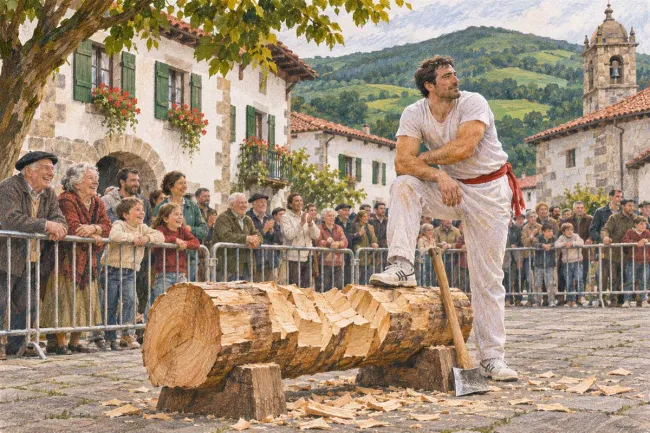
Aizkolaritza is Basque competitive wood-chopping. It grew out of the daily work of woodcutters and charcoal makers. Competitors race to chop through an agreed number of logs, laid flat, and the fastest wins. Betting, by both the choppers and the crowd, has always been part of the fun.
Nohejbal, also called footnet, is a Czech game that looks like volleyball played with the feet, over a low net.
Pesäpallo is Finland's answer to baseball, with its own rules and a devoted following.
Why do they need protecting?
Because many are quietly disappearing. The Council lists the reasons: people moving from villages to cities, a shortage of money and organisers, and games that are barely known outside their home area.
Most also rely on volunteers: local clubs, associations and neighbours who run them for love.
For me, this is the heart of it. A traditional game isn't kept alive in a museum case: it survives only if children learn to play it. That's why I think the Council is right to focus so much on young people.
What are countries being asked to do?
Among other things, the Council invites EU countries to:
- Map their traditional sports and games, nationally and regionally.
- Consider adding them to their national heritage lists.
- Bring them to children and young people, through schools, youth groups and local activities.
- Support the volunteers who run them, without burying them in paperwork.
- Encourage exchanges between countries and festivals.
One important detail: there is no new fund. Any money will come through programmes that already exist, such as Erasmus+ and the European Social Fund Plus.
Why Ireland?
Ireland currently holds the six-month rotating presidency of the Council of the EU, which means it sets much of the agenda. It put these conclusions forward.
‘Europe's traditional sports and games are a vital part of our shared cultural heritage,’ said Charlie McConalogue, Ireland's Minister of State for Sport. ‘They reflect the history, identity and traditions of communities across our continent.’
The good news: they're closer than you think
The best thing about this kind of heritage is that you don't need a ticket to see it. It lives at local fairs, village festivals and club grounds, often within reach of home.
So next time you spot a poster for a traditional games day, stop and watch for a while. And if someone offers you a go, take it. That is exactly how these games survive.
A note on this article: information on the Council conclusions was correct at the time of writing.