
Interview with Charo Reina
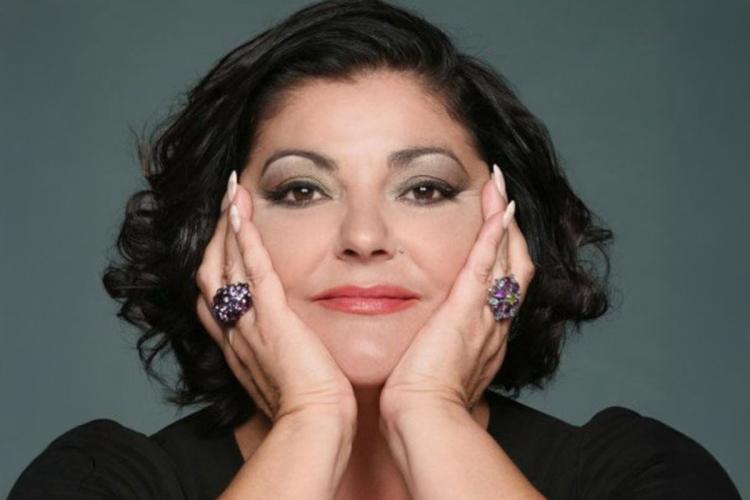
To talk about Charo Reina is to talk about passion, art, and a life dedicated to the show business.
LinkAna Zuazo
Charo Reina was born on April 5, 1960, in the Macarena neighborhood of Seville, into a family with deep artistic roots. From a young age, she organized performances for her neighbors, making it clear that the stage would be her home. At just 14, she enrolled in the School of Dramatic Arts, where her talent shone brightly, earning a first-class honors. Her love of theater led her to create her own company, the Andalusian Comic Company, with which she conquered the stages of Andalusia.
She also shined in films such as "Se acaba el aceite" (The Oil Is Out) and "Un parado en movimiento" (A Stationary Man in Motion), while on television she won the affection of audiences with the series "Pensión el Patio" (El Patio boarding house). But her big break into music came in 1988, when her aunt, the great Juanita Reina, introduced her as her successor at the Teatro Maravillas. Since then, Charo has made copla her flagship, with albums such as "Por Herencia" (Heritage), "Pídeme" (Ask), "Se Busca" (Wanted), and "Por ti y para ti" (For You and for You), a moving tribute to her aunt, in which she even recreated a duet with her. Her latest work, "Amanecí otra vez" (Woke Up Again), is a title that emphasizes her career.
Always restless, always reinventing herself, Charo Reina continues to dedicate herself to art with the same enthusiasm as that little girl who dreamed of applause. In this interview, she opens her heart to talk about her career, her projects, and her fight for causes that deserve to be heard.
You've worked in theater, film, television, and music, and have also participated in a survival game show. You're not afraid of challenges and have taken on everything. Of all these roles, which do you feel most fulfilled in, and why?
Well, I had the opportunity to participate in The Island of the Famous, a program that aired on Antena 3 and was filmed in the Amazon (smiles nostalgically). It was an unforgettable experience, full of learning, but also extremely difficult. I think that, if they offered it to me today, I don't know if I would do it again. I love trying new things and exploring different artistic fields, but where I truly feel fulfilled is on stage. The magic of theater is unique: direct contact with the audience, the energy generated in each performance, and the warmth of the applause create an unrepeatable connection. Every night is different and special. It's where I am truly happy, where my soul vibrates, and where I feel everything makes sense.
Your aunt, the unforgettable Juanita Reina, not only left an indelible legacy in music, but also played a fundamental role in your life and career. You always had a very close relationship with her, sharing unforgettable moments. This year also marks the centenary of her birth. Looking back, what advice of hers do you always carry with you, and how has it influenced your career?
The truth is that my aunt, although she only had one son, had many nephews, and I believe I was fortunate to be one of the closest to her. I accompanied her on many occasions, sharing experiences that I treasure with great affection today. This year, August 25th, would have marked the centenary of her birth, and I feel a great emotion remembering her. She was an extraordinary woman, with immense talent and even greater humility. She gave me a lot of valuable advice, but there's one I always carry with me: "Dream, fly, but with your feet on the ground. The stars are in the sky, but your feet must be on the ground. Humility comes first." These words have guided my path, always reminding me of the importance of staying true to my roots, appreciating every achievement with gratitude, and never forgetting that respect and humility are essential in any artistic and personal journey.
You have a notable presence on social media, especially on Instagram, where you have thousands of followers. How does this connection with your audience influence your career and your daily life?
The truth is, I really enjoy Instagram; it's a platform that allows me to connect with my audience in a very direct and sincere way. I'm quite an early riser; I usually wake up between 5:30 and 6:00 a.m., and one of the first things I do is greet and wish my followers a good day. I love that routine because it creates a very special connection. You wouldn't believe how many people respond with messages full of love, and I always try to reply to everyone. Sometimes they're surprised that I respond to them personally, but I always tell them, "El cariño con amor se paga" (Love is repaid with love), although I recognize it's a huge amount of work.
As for other social media, I have Facebook, but I barely use it, and I've completely set X aside because, honestly, I find it a den of professional insulters. On Instagram, on the other hand, I feel comfortable and proud of my community. I don't buy followers; my 20,500 followers are real, and while some may not think they're many, they mean a lot to me. I prefer quality over quantity, and knowing that there are people who follow me wholeheartedly is what really matters.
Copla has evolved over time, adapting to new generations, but it still needs support to stay alive. In an era dominated by digital music and social media, do you think these platforms can truly help its dissemination, or are other strategies necessary to ensure its continuity?
Social media can help spread the word about copla, but honestly, their impact remains limited. What this genre, so characteristic of us, really needs is a firm commitment from the music industry and record labels, with investments in promotional campaigns and spaces where copla can shine. We mustn't forget that copla is born from the people; it's part of our identity, and as such, it must be cared for and preserved.
I remember one day, walking through a poor neighborhood in Seville, hearing a very young girl sing "María de la O." That moved me deeply because it showed me that copla lives on in people's hearts. As long as there's a child's voice singing those verses with emotion, it means copla is still vital and necessary. We can't let it be lost, and for that, beyond social media, we need real support: festivals, television programs, spaces on digital platforms, and, above all, a decisive commitment from those who can foster its future.
Ageism, considered the third leading cause of segregation worldwide, remains a challenge in our society. Charo Reina, committed to combating ageism, is an ambassador for the Stop Ageism initiative and host of the documentary "Garnades vidas con historia" (Great Lives with History), which gives voice to those who have accumulated wisdom and experience over the years.
Charo, based on your experience, what changes do you think are necessary for society to more fully value the talent and contributions of older adults?
Of course, ageism doesn't just affect older people; it's also a problem that impacts young people. However, as I'm about to turn 65, I feel especially connected to those who suffer from it at this stage of life. When ASISPA (a comprehensive care project for seniors) asked me to be an ambassador for this cause, I didn't hesitate for a second. Bringing visibility to this problem, raising awareness, and working to find solutions seem fundamental to me.
Furthermore, we are currently preparing a new documentary, produced and co-directed by Belén Anguas, focusing on ageism within the LGBTI community. Grandes Vidas Arcoíris (Great Rainbow Lives) will be essential in bringing this reality to light, as many people in this community face double discrimination as they age. Figures like Paca La Piraña and Candela, among many others, grew up imitating copleras with affection and admiration. Today, I believe it's our turn to be there for them, supporting them and asserting their right to age with dignity and respect.
Charo, you're a clear example that age is no limit when you have passion and talent. You never stop working and always have new challenges ahead. What are your next projects, and what would you like to do that you haven't had the chance to yet?
In addition to my collaborations and some television appearances, this summer I'll be at the Teatro de La Latina with three zarzuelas: La del Manojo de Rosas, Agua, Azucarillos y Aguardiente, and Doña Francisquita. This last one is special to me, as it will be the first time I'll perform it, and I'm incredibly excited to take the stage with it.
For me, the most important thing is to keep dreaming, learning, and, above all, maintaining contact with the audience, which is what truly fulfills me. There are always new things to do, and as long as I have energy and projects that motivate me, I'll keep going. Life is a stage, and as long as the lights stay on, I'll keep singing and enjoying every moment.
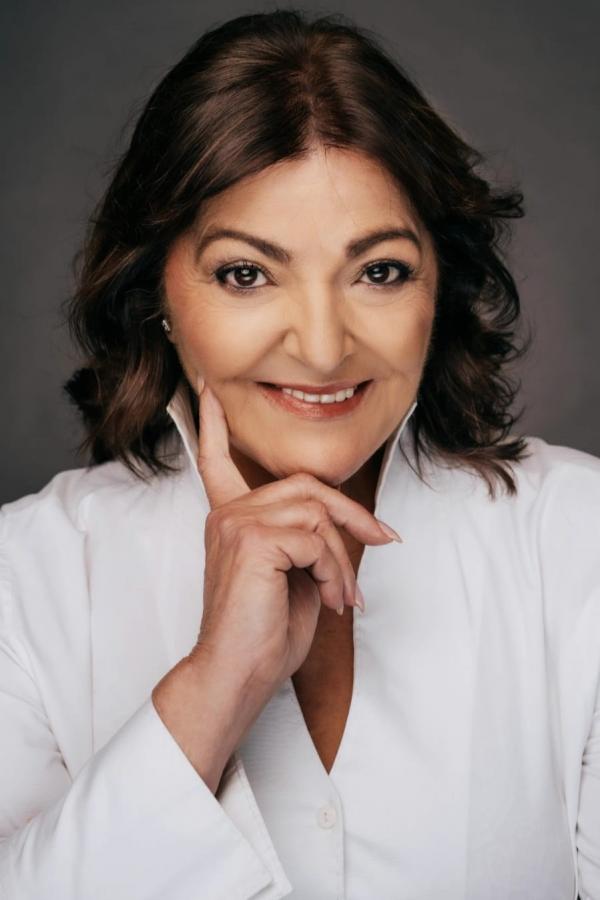
Charo Reina is pure passion, talent, and dedication. Throughout this conversation, she shared fond memories, exciting projects, and her unwavering love for music and the stage. Her energy and warmth make every word feel like a hug. More than an artist, she is a courageous woman who continues to dream and fight for what she loves, unafraid of challenges. With her voice and her heart, she continues to captivate audiences, proving that art has no age or limits. Thank you, Charo, for your light, your art, and for continuing to give us your essence.