
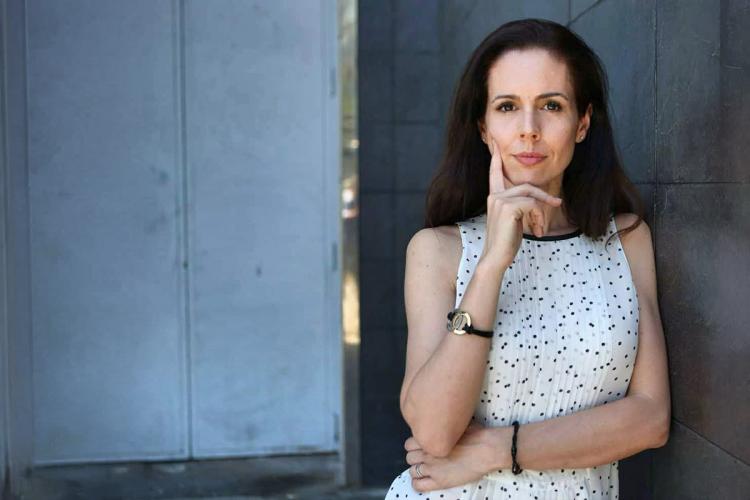
Interview with Mayra Alvarez, etiquette and protocol specialist
Business protocol can be the difference between closing a deal or missing an opportunity.
We live in an era in which professional relationships are increasingly global. A meeting that begins in Madrid can continue with participants in Tokyo, Brussels, or New York within minutes thanks to technology. Yet, although the tools have changed, one thing remains essential: knowing how to relate to other people.
Business etiquette is no longer something reserved for major institutions or official ceremonies. It has become a practical tool that helps build trust, avoid misunderstandings, and project a professional image. Understanding the rules, customs, and sensitivities of the people we interact with can open many doors and, above all, prevent mistakes that can sometimes be difficult to repair.
To discuss this topic, we once again turned to Mayra Álvarez, journalist, specialist in institutional protocol and event management, lecturer, and author of several books on protocol and etiquette. Thanks to her international experience and her work advising and training professionals, she has first-hand knowledge of how cultural differences can influence negotiations and why more and more companies consider these skills a competitive advantage.
When we talk about business etiquette, many people think of something old-fashioned or overly formal. What would you say to them?
They are very mistaken.
Business etiquette is not about memorising rigid rules or behaving artificially. In reality, it is a tool that helps us interact more effectively with others and convey professionalism.
Today, companies place enormous value on what are known as soft skills: communication, active listening, teamwork, and the ability to behave appropriately in different environments. Two professionals may have the same technical qualifications, but the one who can inspire confidence and navigate a meeting with ease will have a significant advantage.
I always say that etiquette is an added value. It is what allows you to stay one step ahead. We often think that the most important elements in a negotiation are the numbers or the arguments, but first impressions, the way you address others, and your ability to adapt to the environment also matter. And they matter a great deal.
I also see considerable shortcomings in this area. We often have excellent technical training, but sometimes lack the tools to build effective professional relationships. That is where business etiquette can make all the difference.
Are education and good manners something people learn outside, or do we learn that at home?
The foundations undoubtedly come from home. Our parents, schools, and social environment teach us the first rules of coexistence: respecting others, saying thank you, listening, and being considerate.
But that is only the beginning. After that comes the personal work each individual must do to identify weaknesses and improve. No one is born knowing how to behave in an international negotiation or how to act in specific professional settings.
Furthermore, social norms are constantly evolving. A very clear example can be seen after the pandemic. In Spain, it used to be common to greet people with two kisses, even in many professional contexts. Today, the situation has changed, and people are much more cautious about physical contact.
That is why it is important to stay up to date and observe how society evolves. Etiquette is not static; it changes with the times and adapts to new realities.
There are public figures who represent this ability to adapt very well. Queen Letizia of Spain, for example, has demonstrated remarkable development in this regard. One can clearly see continuous preparation and a deep understanding of institutional protocol, something that does not happen by chance but through dedication and learning.
You have lived in several countries. What mistakes do we usually make when doing business abroad?
The most common mistake is assuming that things work the same way everywhere. They do not.
When travelling for business, we usually prepare our presentation, company data, and commercial strategy. However, we often forget to study the people we are meeting and the cultural context in which they operate.
For example, in South Korea and Japan, the exchange of business cards carries enormous importance. A card should be received with both hands and with respect, and it should be examined carefully before being put away. It may seem like a small detail, but for them it is a sign of consideration for the person in front of you.
There are countless similar examples. Working hours, forms of address, conversational silence, and even the physical distance people maintain can vary greatly from one country to another.
That is why I always recommend preparing thoroughly before any international trip or meeting. You never know where you might unintentionally make a mistake.
I remember a very curious anecdote. A company from our country wanted to impress a Japanese delegation and decided to take them to the best Japanese restaurant in the city. They thought it was the perfect gesture. However, the visitors were eager to try Spanish cuisine. The intention was good, but they had not considered what their guests might actually enjoy.
The lesson is simple: good intentions are not enough. You also need information.
How should a company prepare for an important international meeting?
The first step is to do your homework. And by that, I mean researching as much as possible.
It is advisable to prepare a brief dossier about the country and the people you are going to meet. It should include basic information such as entry requirements, embassy and consulate contact details, time differences, working hours, and the most relevant customs.
It may sound obvious, but many planning-related mistakes are still made. For example, scheduling a video conference without considering that it may be the middle of the night or a particularly inconvenient time for the other party.
Punctuality also deserves special attention. In some countries, arriving late is interpreted as a serious sign of disrespect. In others, there may be greater flexibility, but even so, it is always better to err on the side of punctuality.
Corporate gifts are another important consideration. In some countries, certain gifts may carry negative connotations, while particular colours or numbers have very specific meanings.
Then there are institutional details. Something as simple as displaying the wrong flag, misspelling the name of an official, or using the wrong national anthem can create a very uncomfortable situation. We have seen such mistakes even at international sporting events, and the image they project is highly negative.
When a company demonstrates that it has taken the time to understand its counterparts, it sends a very clear message: “You matter to us, and we have made an effort to understand your culture.” That always works in your favour.
What would be your main advice for people who want to improve their social and professional skills?
Do not be afraid to learn.
Sometimes people think etiquette is something reserved for diplomats or senior executives, but that is simply not true. Everyone can benefit from this knowledge.
Today there are specialised courses, books, conferences, and a vast amount of information available online. That said, I always recommend verifying information, because not everything circulating on social media is accurate.
Observation is also important. Travelling, learning about other cultures, and paying attention to how people behave in different contexts is an excellent education.
Above all, it is important to remember that etiquette is not about pointing out other people's mistakes. Quite the opposite. When negotiating or trying to build a professional relationship, flexibility is often the wiser approach.
If someone commits a social misstep, it is not always necessary to highlight it. There are situations in which it is more intelligent to overlook the mistake and focus on the main objective. If your goal is to close a deal, your priority should be to create a positive atmosphere based on trust.
Ultimately, etiquette, when properly understood, is closely linked to empathy. Its purpose is to facilitate human relationships, not complicate them.
Conclusion
After speaking with Mayra Álvarez, it becomes clear that business etiquette goes far beyond knowing where to sit at a table or how to exchange a business card. At its core, it is about understanding people, respecting their customs, and demonstrating genuine interest in those we interact with.
In an increasingly international and competitive marketplace, these small details can become major advantages. Preparing for a meeting, understanding a counterpart’s culture, or simply knowing how to listen are gestures that convey professionalism and build trust.
Because, as Mayra reminds us, agreements are not signed by companies—they are signed by people. And when relationships are built on respect, empathy, and cultural intelligence, the chances of success are always greater.