
Interview with Rubén Puga
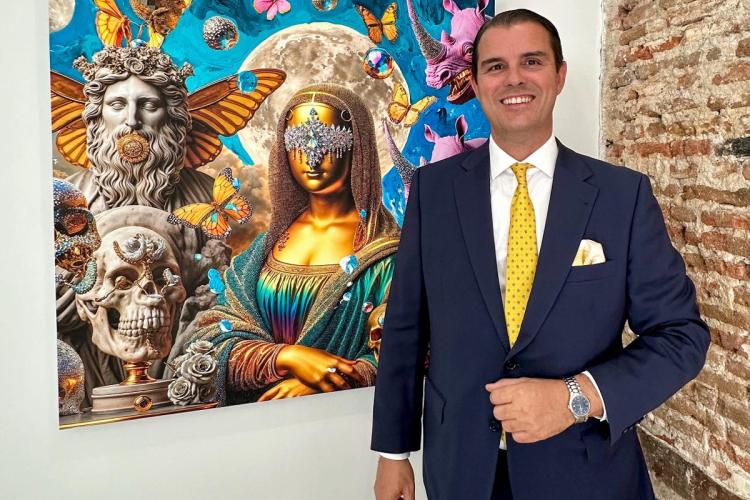
Rubén Puga is a professional who has successfully combined finances, culture, and innovation into a unique model.
There are gazes that convey sincerity and ways of being that capture attention from the first moment. Rubén Puga is one of those leaders. With more than 27 years of experience in the international financial, banking, and art sectors, he has combined technical excellence and cultural sensitivity. He holds a degree in Economics and Business Administration, an MBA from the University of Barcelona, and is an EFPA-certified European Financial Advisor, with additional training in taxation, innovation, and sustainable finance.
He has held senior positions at banks such as Triodos, Popular, and Pastor, and was CEO of ARTEX, an art company linked to the royal family of Liechtenstein. He currently chairs the Fidelitas Group, a firm that merges financial consulting and art as an investment, and has served as director of the Relife Foundation, dedicated to providing second chances.
Rubén, your career combines finance, art, and a deep social sensitivity. How did this integrative vision emerge, and what role does your personal environment play in it?
My training and experience in the banking sector gave me a solid foundation, but my family environment was key to developing a broader vision. My parents, both professors —my mother has a PhD in Psychology— instilled in me a strong cultural foundation, critical thinking, and a great respect for knowledge. The support of my wife, who actively collaborates on several group projects, has also been fundamental, with a valuable strategic and creative approach. My children are also very involved in this development: my eldest son will begin training with us this summer at Fidelitas, and my youngest daughter, at just five years old, is already showing promise as an artist: she loves singing, painting, and anything creative she loves. That connection with humanity and art is part of the DNA of everything we do. The sensitivity, commitment, and educational vocation I experienced from a young age are now translated into a different way of understanding business leadership.
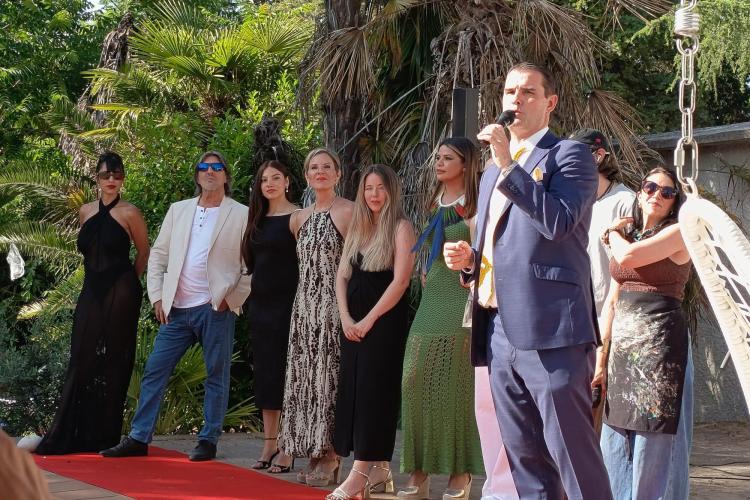
You are known as "the banker of art." What does democratizing art really mean from a financial perspective?
Democratizing art means making it accessible to everyone, not just major collectors or institutional investors. At Fidelitas, we offer art investments from €1,000 to €350 million. We work with a fund that includes more than 350 artists —painters, sculptors, photographers, musicians— and we also participate in theater, film, and even fashion productions, collaborating with both top designers and models. We bring art to the client and generate interest from there, without intermediaries. We guide them throughout the entire process, combining market analysis, asset management, and artistic advice. In fact, art is 90% correlated with gold, making it an excellent asset investment. Furthermore, cultural assets offer something other assets can't: identity, legacy, and emotion. And that, too, has value. We are committed to financial education that includes art as an essential part of family, business, and institutional assets.
Fidelitas is growing rapidly, even internationally. What's the key to this expansion?
The niche we operate in —the intersection of art, culture, and finance— is very specific and clearly differentiates us in the sector. Furthermore, the Group is comprised of seven specialized companies that cover different sectors related to art investment, allowing us to approach each transaction from multiple angles. Our expansion in countries like Italy and France responds to a growing demand for more personalized, humane investment models with added cultural value. We've detected that both traditional investors and new investors are seeking sustainable alternatives with a purpose and connected to their identity. Our approach is to offer tailored solutions, adapted to the profile and values of each client. The professionalization of the art sector is key, and our team combines training in banking, taxation, art history, and communication to ensure each transaction has a solid foundation and a tangible impact.
You also have a very active personal and social side. Could you give us a preview of the next steps in this area?
Of course, and you're the first I'm going to tell this to: one of our upcoming short-term projects is the creation of our own foundation. We already collaborate with many of them, but we feel the time has come to channel that commitment in a direct and structured way. Our vision goes beyond capital; we believe that art has the power to heal, transform, and provide second chances. We want to work on three axes: support for emerging artists with talent, but without access to the market; artistic training for children and young people in vulnerable contexts; and cultural projects with real social impact. We also want to connect the business world with the creative world, and for the foundation to be a meeting point for projects with soul, sensitivity, but also strategic vision. This is a mission we take very seriously and reflects who we are as a group: ethics, aesthetics, and commitment.
What message would you give to young people seeking a professional vocation?
Study what you love, what your heart tells you. Education is undoubtedly very important, and new technologies are opening up fascinating paths, but without passion there is no excellence or lasting purpose. Today we live in a time of accelerated change, where degrees are no longer everything, and where practical skills, creativity, and authenticity make the difference. I am an avid reader and I always say that education and culture are the best long-term investments. Reading gives you perspective, broad-mindedness, and empathy. Don't be swayed only by what "makes money," because what truly generates value is what you do from your vocation. Let them explore, make mistakes, and experiment. And let them understand that success isn't about accumulating, but about transforming, inspiring, and leaving a mark through what one knows how to do.
Talking to Rubén Puga opens the door to a new way of understanding finance, art, and the value of legacy. His technically impeccable yet profoundly humane career demonstrates that it is possible to transform traditional models through passion, culture, and social commitment. Listening to him speak about art as an accessible, emotional, and strategic investment, with rigorous market knowledge and a sensitivity rarely seen in the financial world, has been revelatory.
His vision not only inspires professionals and investors, it also awakens new concerns in those of us who, like me, discover that art doesn't have to be distant or reserved for a select few. What if this interview is the beginning of my journey as a small-time collector? Perhaps, as he himself defends, investing in beauty and culture is also a powerful —and profitable— way to build a future. Rubén doesn't just lead companies, he leads ideas. And that, without a doubt, leaves a mark on everyone.