
Paula Klein's "El amor inventado" wins the 4th Lumen Novel Prize.
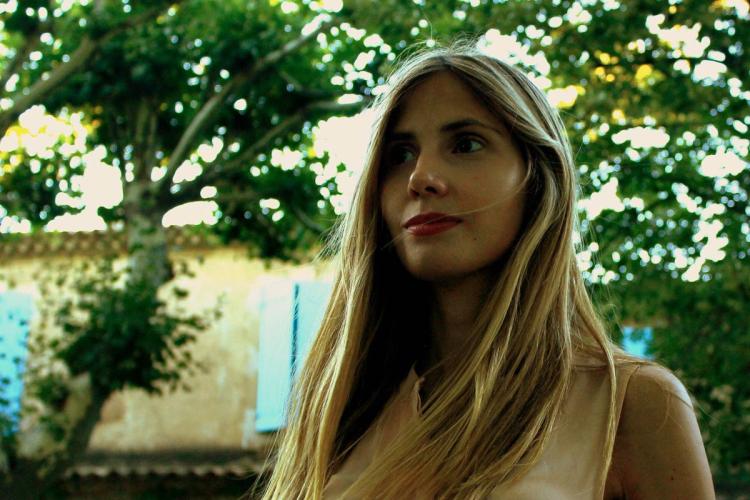
This is a story about love, lies, and the fictions that sustain a relationship. Submitted under the pseudonym Vera Mens, the novel was declared the winner by a majority vote of the jury for the 2026 Lumen Novel Prize.
LinkMyriam BO
For this edition, 683 manuscripts were received from Argentina (122), Colombia (24), Chile (34), Spain (396), the United States (16), Mexico (65), Peru (9), and Uruguay (17). The prize carries a cash award of €30,000 and includes publication throughout the Spanish-speaking world.
The jury wishes to highlight the large number of manuscripts received and the quality of the finalist novels. Consequently, it has decided to recognize the novel *Estado de distancia* by Belén López Peiró as a finalist in this edition.
From the jury's statement: "*El amor inventado* is an ambitious novel that immerses us in the unsettling investigation of a man who is a con artist in both his public and private life. Seeking to decipher her husband and tracing his past, documentary filmmaker Miranda K. questions the nature of love. Is every couple not, after all, a pact based on fiction? What kind of woman are you when you have spent half your life with a liar?"
*El amor inventado* will be available in bookstores starting October 1st.
Argentine writer Paula Klein joins the list of winners, which includes Ángeles de Irisarri, Ana Rodríguez Fischer, Clara Obligado, Alicia Giménez Bartlett, Clara Usón, Leticia Martin, Natalia Litvinova, and Inma Pelegrín.
A preview...
This is how it begins
Beginnings are easy to recognize; endings, far less so. People tend to clearly remember the day they met the love of their life, their first kiss, the birth of a child. Yet hardly anyone can say at what exact moment everything fell apart. Capturing the past is a romance not suited for the impatient. Every detail counts. You have to observe, listen, and learn to stay as still as a stone. Only when you become invisible does your surroundings come to life. This is the story of the lies we tell to make life less unbearable. The facts are true, but nothing is real. It is also the chronicle of an abandoned marriage. A tale of love and ghosts. If you don’t believe in ghosts, it’s because you haven’t yet had to live with one. Mine is made of flesh and blood, though at times he seems like a trail of smoke—a figure that dissolves if I draw near.
Charles Mornay was a great reporter, one of the star journalists at *Le Journal du Soir*. The paper held its own against the likes of the American *Time* or *Newsweek*, the German *Die Zeit*, and London’s *Wall Street Journal* or *Financial Times*. When Charles landed a permanent position there, his friends and colleagues began to see him in a different light. They revered him, envied him, praised him, or criticized him—but no one ever treated him the same way again. During his five years there, he won the Best Reportage award three times, the Albert Londres Prize twice, and the CNN Journalist Award and Jean-Luc Lagardère Prize once each. On February 5, 201X, he was accused of fraud. Within days, his charade collapsed: ninety-nine percent of the sixty reports he had published contained fabricated passages. When the revelation broke, he admitted his guilt and vanished. Several months have passed since that cold Monday, and no one yet knows where he is. How did the very man who had posed confidently and smiling on the red carpet manage to vanish into thin air? How can an applause-addict step out of the picture after having tasted the sweetness of success?
Charles Mornay was married to Miranda K., an acclaimed documentary filmmaker. She had released a feature film and several shorts that garnered rave reviews and circulated at independent festivals. When the truth came to light, she was filming the story of Hélène and André, an elderly couple sharing a love story spanning more than sixty years. The last photo taken of the couple together shows them arriving at a French television awards ceremony. Miranda has delicate features, shoulder-length brown hair, and is wearing a form-fitting navy blue dress. Her ankles are slender; she wears silver heels and carries a matching clutch. He is dressed in a suit of the same color, a white shirt, and brown shoes. Standing 1.90 meters tall, with wheat-blonde hair and deep blue eyes, he possesses the presence of someone accustomed to moving in circles where his word carries weight. One hand is in his trouser pocket, the other resting on his wife’s waist. The symmetry of the dark blue attire gives them that deceptive air of kinship that long-term couples eventually acquire—to the point of physically resembling one another—as if the spouses were siblings or cousins rather than people who share no blood ties.
To an outsider, they were the object of envy. They loved each other, had good jobs, and a beautiful six-year-old daughter. They were affectionate parents and serious, respected professionals with a bright future ahead of them. In the photo, both are looking toward the camera, offering a modest smile.
The Author
Paula Klein was born in Buenos Aires in 1986. She holds a PhD in Comparative Literature and a degree in Literature from the University of Buenos Aires, as well as a master’s degree from the École des Hautes Études en Sciences Sociales. She resides in Paris and has taught Latin American and Comparative Literature at various universities in France. Since 2022, she has been a professor at Université Clermont Auvergne. Her research focuses on documentary literature and the connections between fiction and non-fiction in contemporary Latin American narrative. Her first novel, La luz de una estrella muerta, was published in 2021. That same year, Classiques Garnier published her essay Petites mémoires et écriture du quotidien: Cortázar, Perec et leurs échos contemporains (winner of the PSL-Translitterae publishing award). Her second novel was Las brujas de Monte Verità.